
Metallurgical Waste & Industrial Residue Recovery
Underutilised residues assessed as potential secondary resources.
South African industry holds substantial volumes of residue that were never economic to process under the flowsheets and metal prices of the day. Conditions change. What is needed is the engineering work to establish whether a given stream can now be recovered, and on what terms.
Why look at metallurgical waste?
Residues, slags and by-products accumulate because recovering them was uneconomic at the time they were generated — not necessarily because the value was absent. Metal prices, technology and disposal costs have all moved since.
A residue stream is worth assessing when it is available in volume, reasonably consistent, and holds a target species at a grade that current technology can release economically.
Characterise before selecting anything
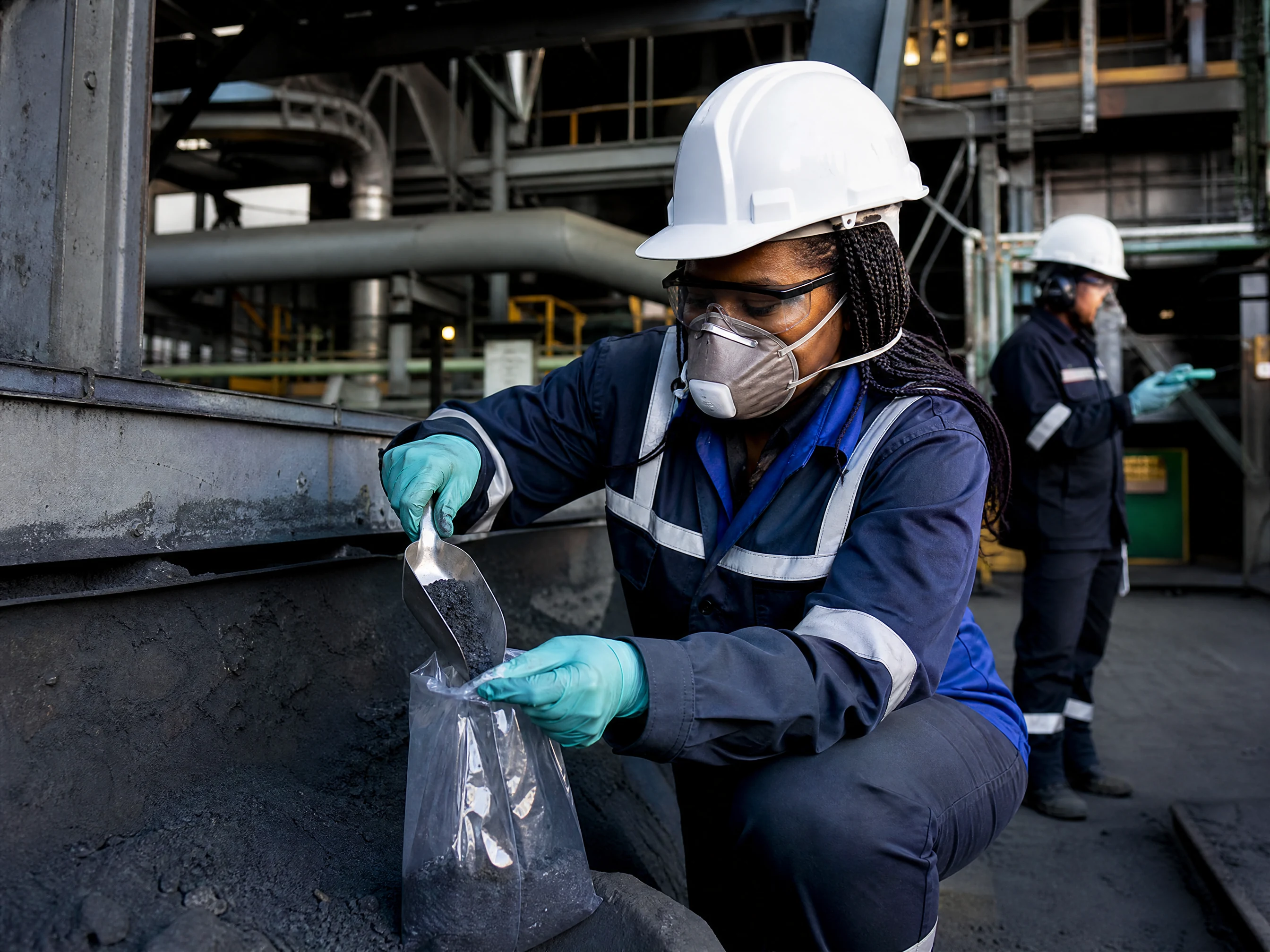
The single most common failure in residue projects is a route chosen before the material was properly understood. Characterisation comes first: chemistry, mineralogy, particle size, and how the target species is actually held.
Representative sampling matters more than sample volume. A large sample that does not represent the stockpile produces confident and misleading results.
- Representative sampling across the stream or stockpile
- Chemistry, mineralogy and particle-size distribution
- Deportment of the target species through the size fractions
Technologies considered
Shortlisted on material behaviour, then discriminated by bench test work.
Gravity Separation
Conventional and enhanced gravity separation where density contrast supports recovery.
Dense Medium Separation
DMS for coarse pre-concentration and early rejection of barren material.
Flotation
Surface-chemistry-based separation for finer fractions and complex mineralogy.
Magnetic Separation
Magnetic and electromagnetic separation across a range of intensities.
Pre-Reduction
Thermal pre-treatment to change phase behaviour ahead of downstream recovery.
Integrated Routes
Combined circuits where no single technology carries the full recovery duty.
Recovery and waste reduction are the same action
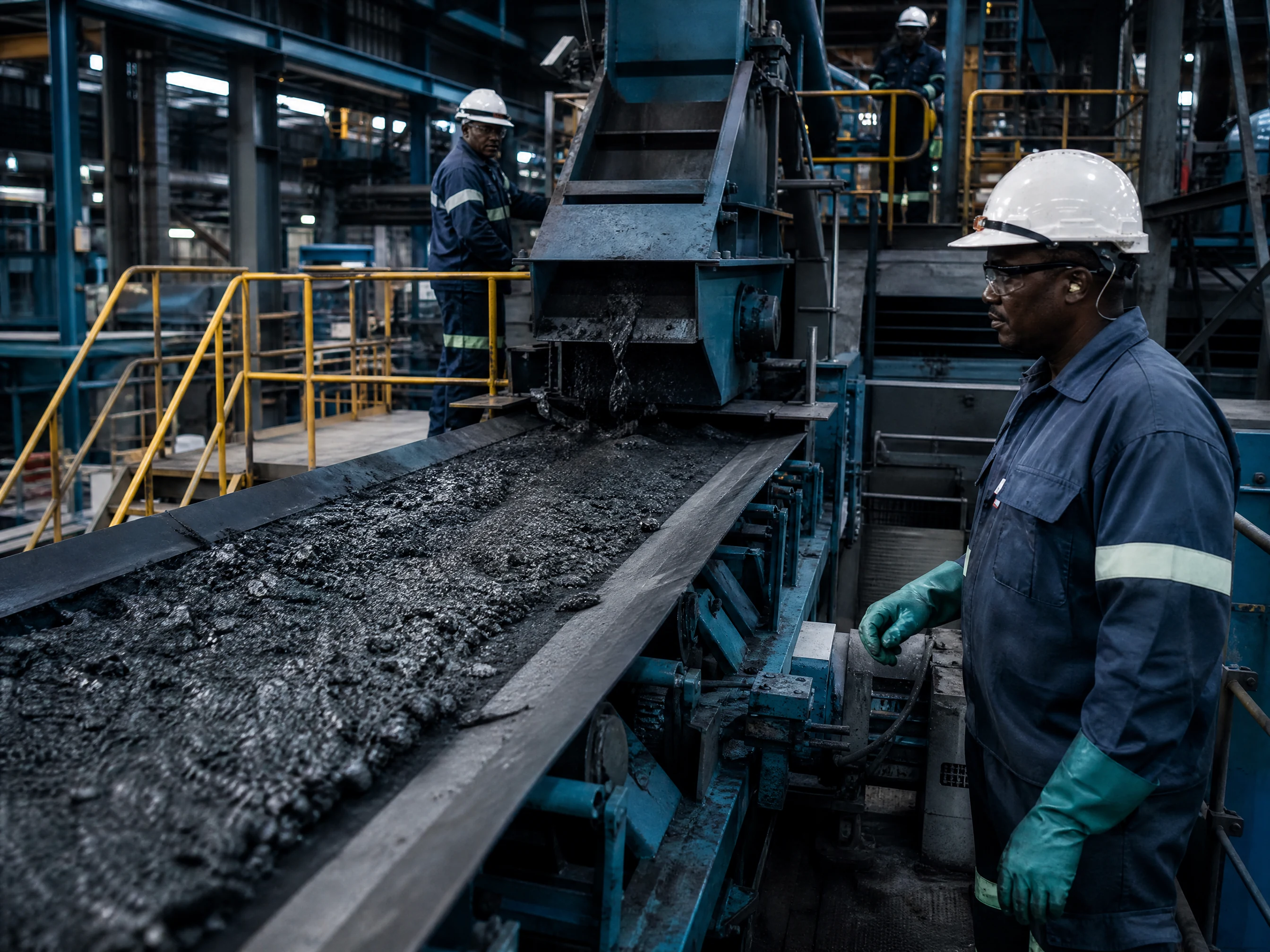
Material recovered from a residue does not have to be mined, and does not remain on surface as a long-term liability. The commercial case and the environmental case point the same direction.
That alignment is what makes residue recovery durable rather than dependent on a single favourable metal price.
SustainabilityHow the route is proven
No scale-up recommendation is made ahead of the test work that supports it.
Characterise
Chemistry, mineralogy, particle size and deportment of the target element.
Screen
Compare candidate technologies against how the material actually behaves.
Bench Test
Controlled bench-scale work designed to discriminate between routes.
Model
Mass and energy balances to size the circuit and expose sensitivities.
Pilot
Integrated pilot running where scale-dependent behaviour carries real risk.
Engineer
Process engineering and implementation support for a proven route.
Frequently asked
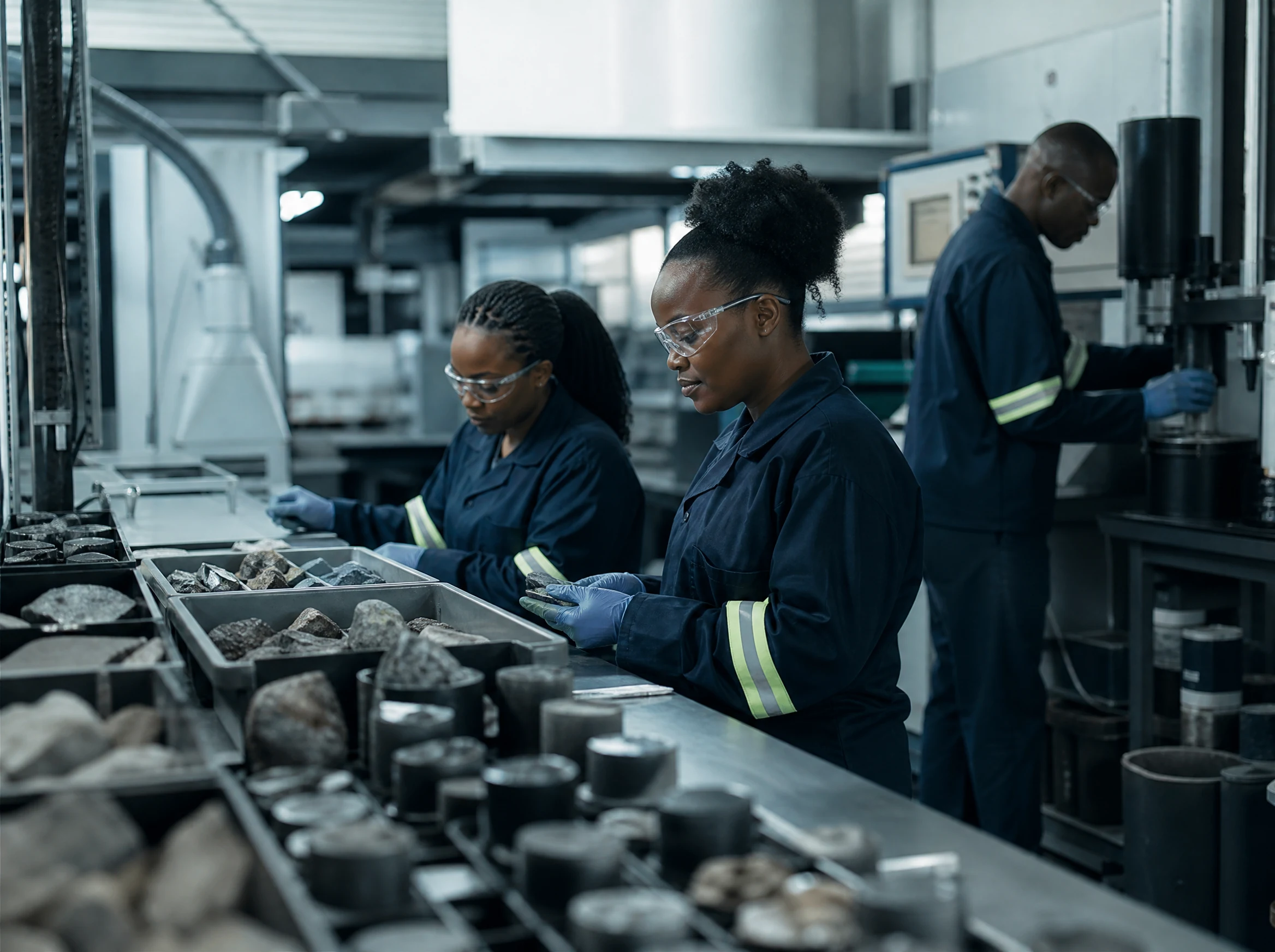
Slags, ferroalloy residues, tailings, fine fractions, dusts and process by-products are all candidates. Suitability is a question of characterisation rather than category — two residues of the same nominal type can behave completely differently.
How the target species is held in the material. If it is physically liberated at a workable size with sufficient density or magnetic contrast, separation may release it. If it is chemically bound, a thermal or aqueous stage is needed, and the economics change accordingly.
Because scale-up commits capital against assumptions. Bench and pilot work convert those assumptions into measured behaviour while the cost of being wrong is still small.
Discuss your material or process challenge
If you hold a residue stream, by-product, tailings resource or slag with possible recoverable value — or a process that is not performing as designed — we are interested in the technical detail.