Process Technologies for Resource Recovery
Selection driven by material behaviour, not by preference or availability.
Every separation technology exploits a specific physical property — density, surface chemistry, magnetic response, particle size. Which one applies is decided by what the material actually does in test work, not by what has worked on a different feed elsewhere.
How is a technology selected?
By establishing how the target species is held in the material: its liberation size, density contrast against the gangue, magnetic response, and surface behaviour. Those properties determine which technologies could work at all.
Bench test work then discriminates between the shortlisted candidates on the actual feed. Technology selection made from composition alone is a guess with a number attached to it.
What we apply
Gravity Separation
Density-based separation where the target and gangue differ sufficiently in specific gravity.
Enhanced Gravity Separation
Intensified gravity fields that extend density separation into finer size fractions.
Dense Medium Separation
Density-based pre-concentration that rejects barren material early and cheaply.
Flotation
Selective separation using differences in surface properties, suited to fine and complex feeds.
Magnetic Separation
Separation on magnetic response, across a range of field intensities.
Pre-Reduction
Thermal or chemical pre-treatment that prepares material for subsequent recovery.
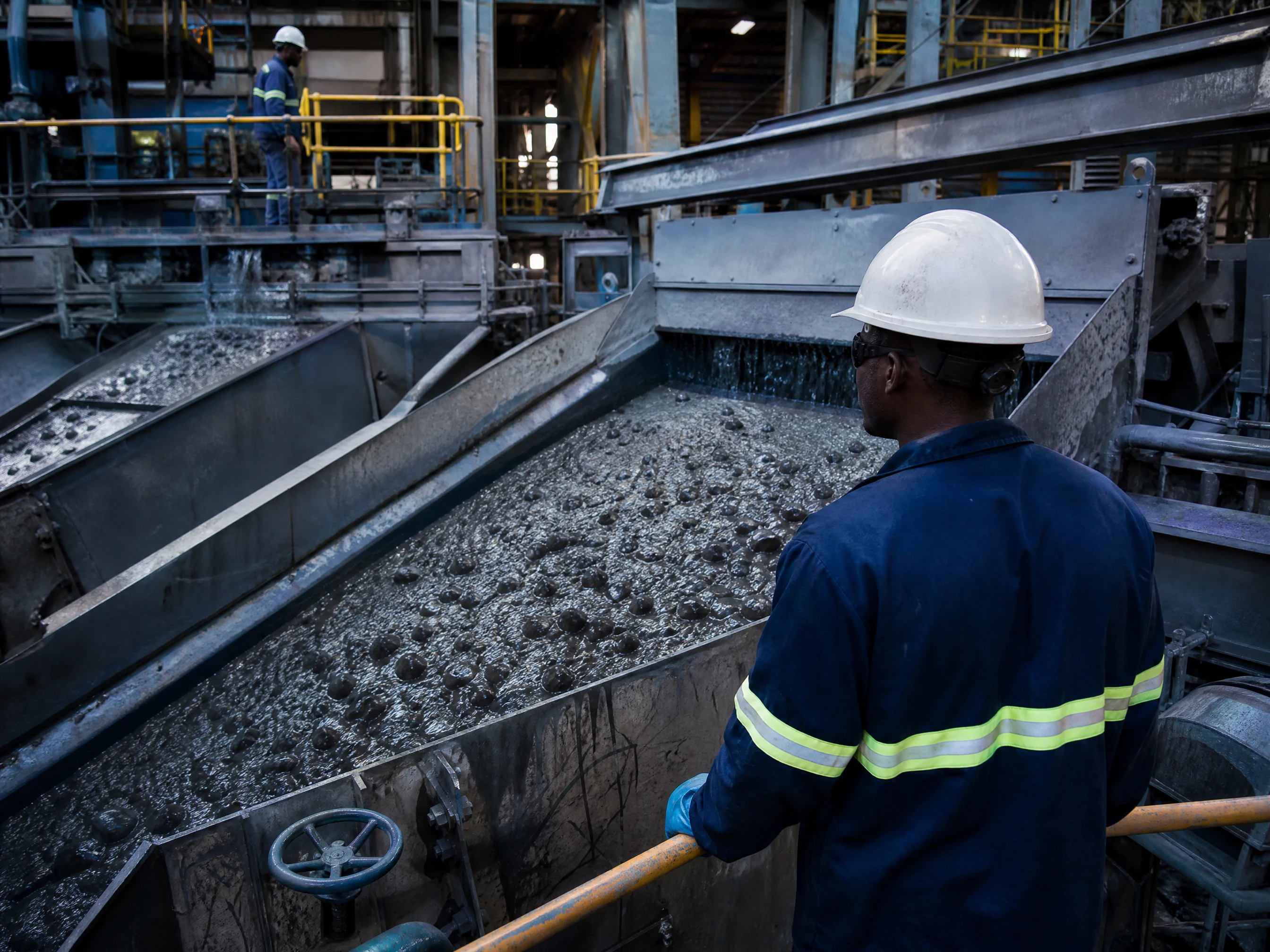
Reject barren material as early as possible
Every tonne of barren material carried deeper into a circuit costs energy, reagent and capacity. Early rejection, usually on density, is one of the most reliable ways to improve overall project economics.
It also raises the grade reaching any downstream thermal or aqueous stage, which is frequently what makes those stages viable.
- Coarse rejection on density before finer processing
- Reduced mass and higher grade to downstream stages
- Lower energy and reagent demand across the circuit
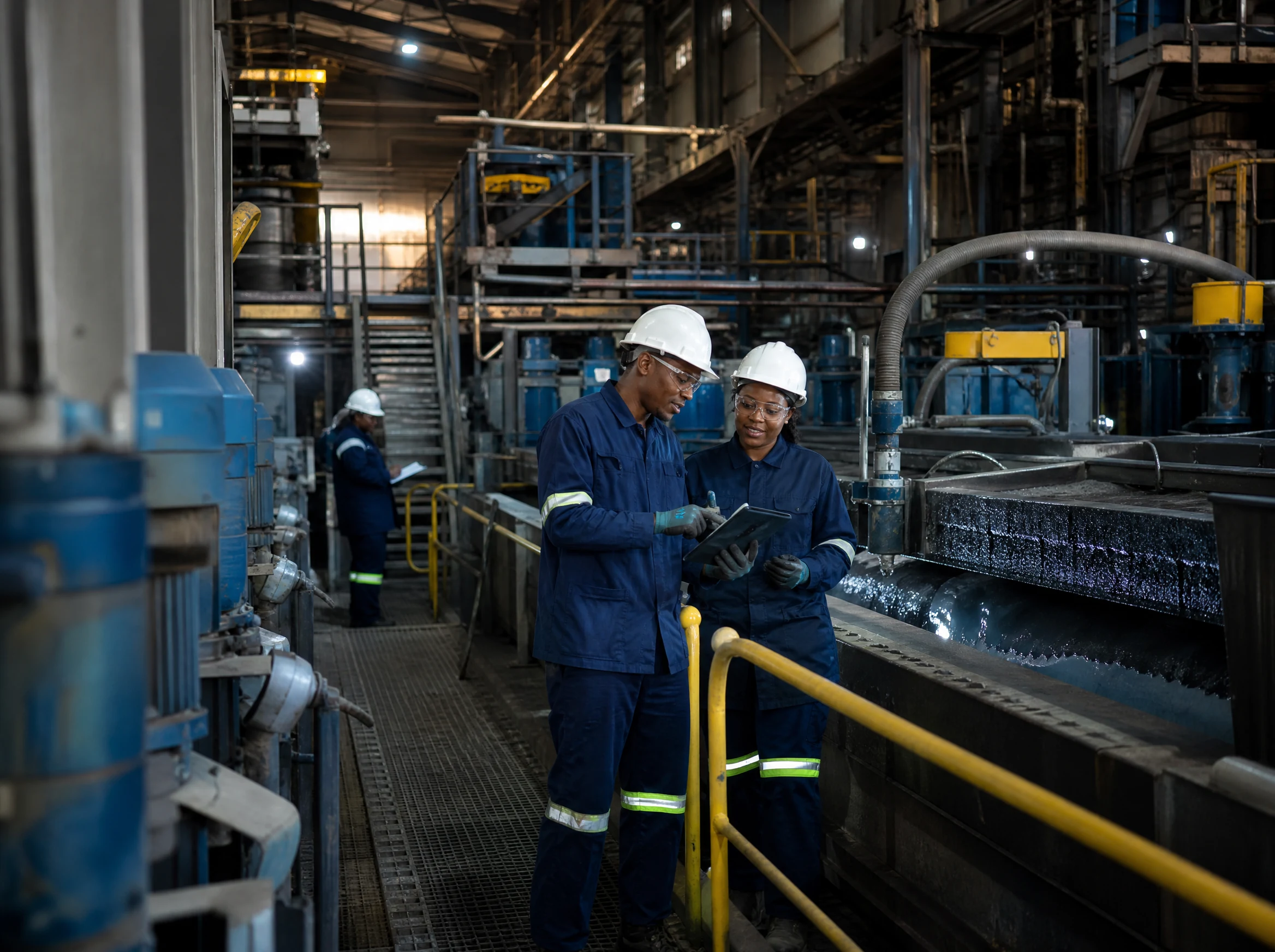
No single technology carries the duty
Residue streams are heterogeneous. A single unit operation rarely recovers the target across the full size and liberation range, which is why most workable routes combine several.
VIIS assembles appropriate unit operations, then evaluates the combination through balances, modelling and bench or pilot validation — as one system rather than a sequence of separately optimised steps.
Process DevelopmentDiscuss your material or process challenge
If you hold a residue stream, by-product, tailings resource or slag with possible recoverable value — or a process that is not performing as designed — we are interested in the technical detail.