
Tailings Beneficiation & Resource Recovery
Assessing historical tailings as a potential secondary resource.
Tailings were processed once under the technology and metal prices of their day. Some hold recoverable value under current conditions and some do not — and the difference is established through characterisation rather than assumption.
Can tailings be reprocessed?
Sometimes. Tailings are a candidate where the original flowsheet left value behind, where technology has since improved, or where the metal price has moved enough to change the economics.
They also carry advantages a fresh orebody does not: the material is already mined, crushed and on surface. Against that, grades are typically low and the volume required to make a project work is correspondingly large.
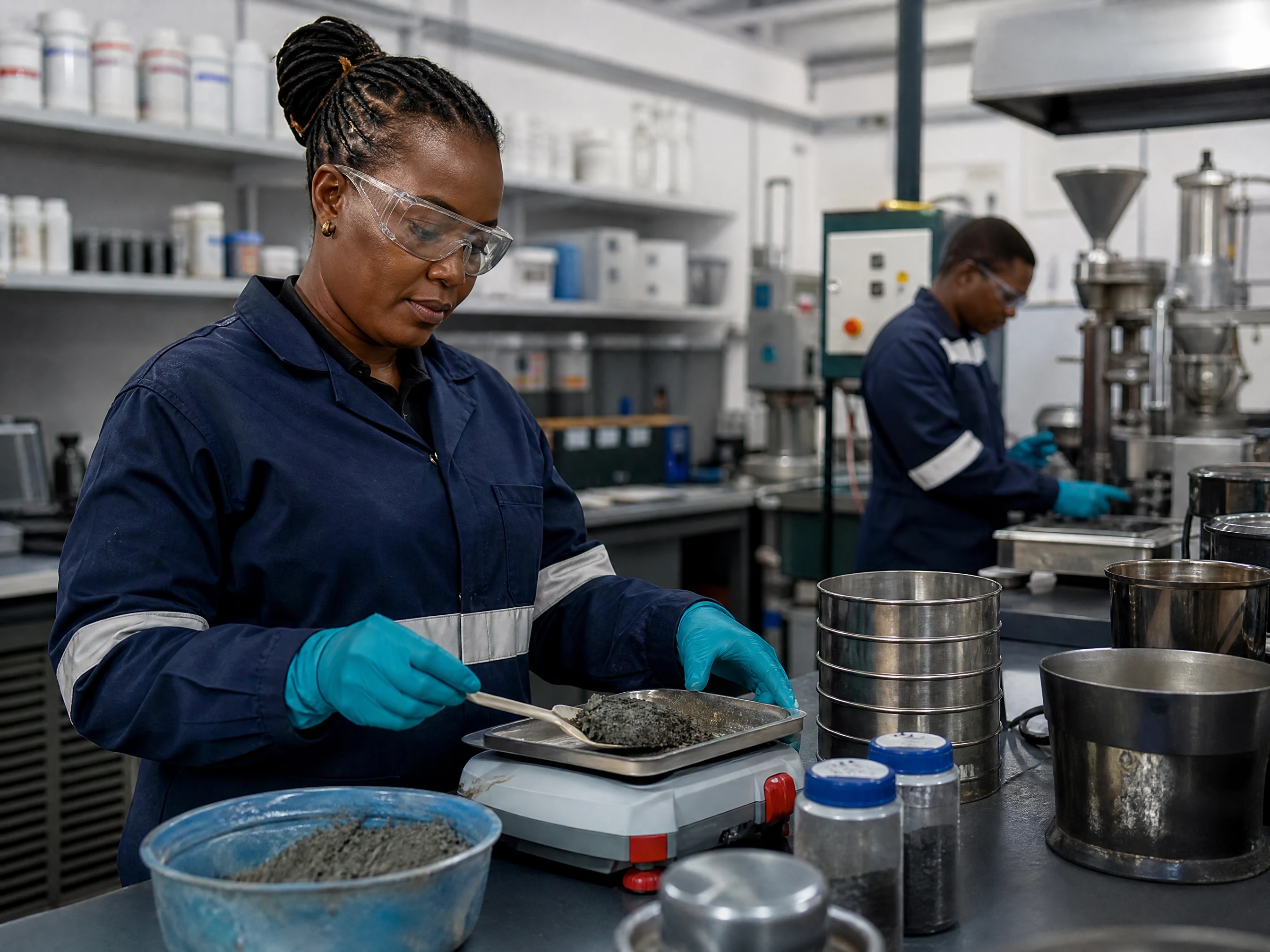
Define value, behaviour and constraints
Assessment establishes what is present, how it is held, and what would limit a recovery route — slimes content, clay behaviour, water chemistry and the consistency of the deposit across its volume.
Tailings dams are rarely homogeneous. A sampling programme that does not account for that will characterise a deposit that does not exist.
- Sampling across the deposit rather than at convenient points
- Target grade, mineralogy and particle-size distribution
- Processing constraints identified early: slimes, clays, water chemistry
Technologies considered
Shortlisted on material behaviour, then discriminated by bench test work.
Gravity Separation
Conventional and enhanced gravity separation where density contrast supports recovery.
Dense Medium Separation
DMS for coarse pre-concentration and early rejection of barren material.
Flotation
Surface-chemistry-based separation for finer fractions and complex mineralogy.
Magnetic Separation
Magnetic and electromagnetic separation across a range of intensities.
Pre-Reduction
Thermal pre-treatment to change phase behaviour ahead of downstream recovery.
Integrated Routes
Combined circuits where no single technology carries the full recovery duty.
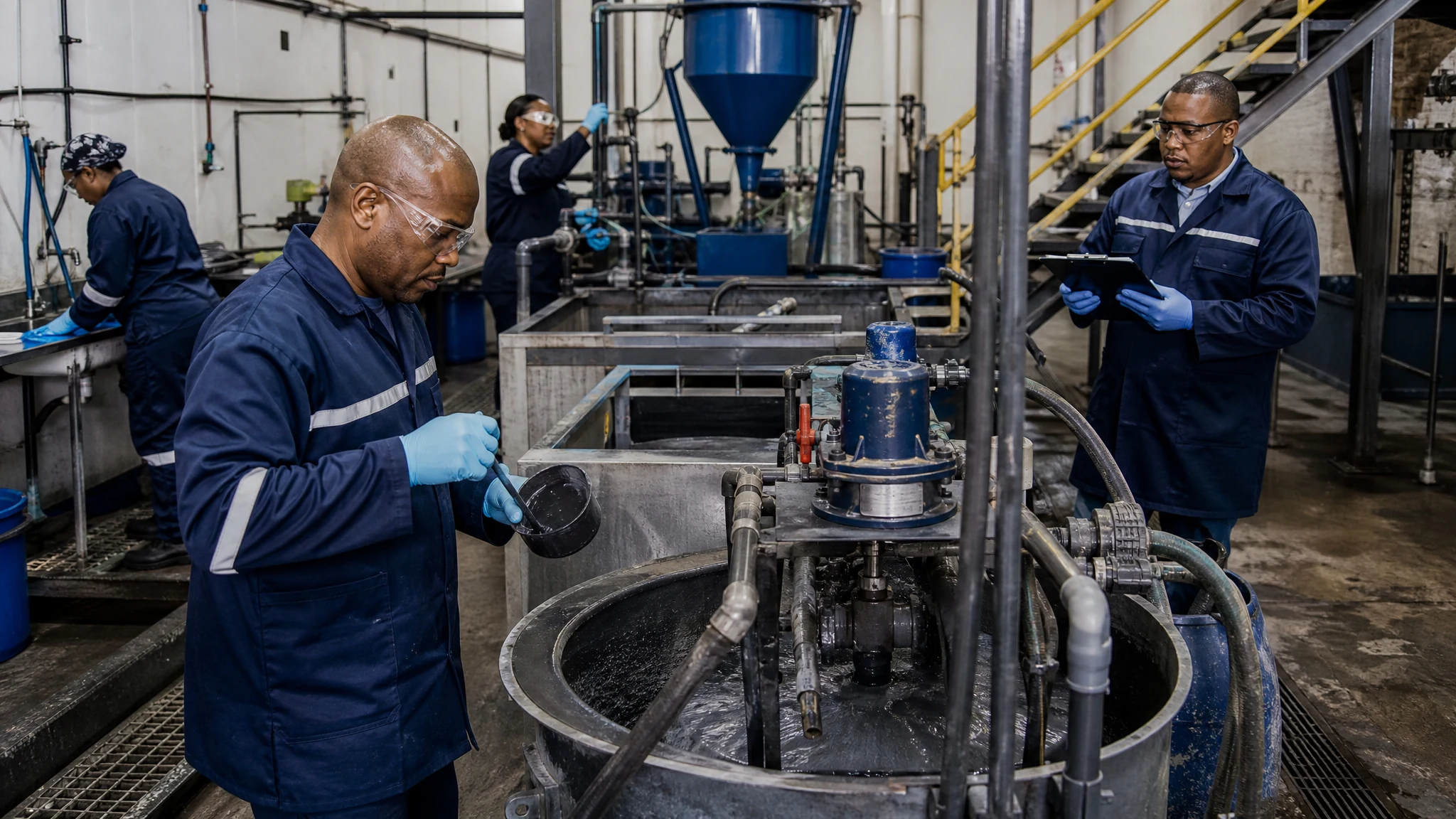
Reprocessing reduces a standing liability
A tailings project that recovers value and reduces the volume or hazard of the remaining deposit delivers on two fronts at once. In some cases the residue after reprocessing is more stable than what was there before.
We assess that outcome on the specific material rather than claiming it generally — it does not hold for every deposit.
SustainabilityHow the route is proven
No scale-up recommendation is made ahead of the test work that supports it.
Characterise
Chemistry, mineralogy, particle size and deportment of the target element.
Screen
Compare candidate technologies against how the material actually behaves.
Bench Test
Controlled bench-scale work designed to discriminate between routes.
Model
Mass and energy balances to size the circuit and expose sensitivities.
Pilot
Integrated pilot running where scale-dependent behaviour carries real risk.
Engineer
Process engineering and implementation support for a proven route.
Frequently asked
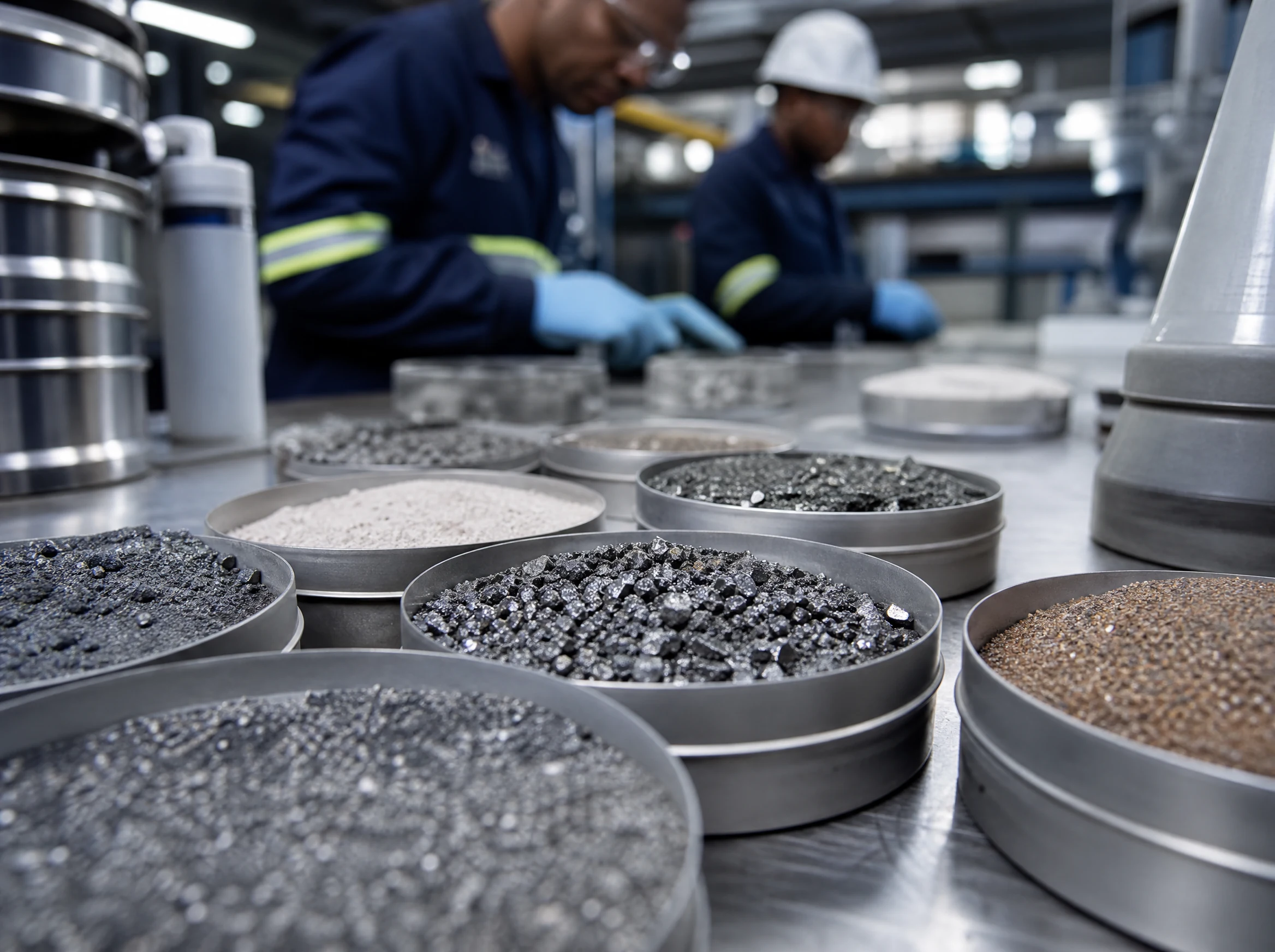
No. Many deposits hold too little recoverable value, or hold it in a form no current technology releases economically. The assessment exists to establish which case applies before money is committed.
Recoverable grade, total tonnage, the cost of the route, and what the recovered product sells for. Low grade can still work at sufficient volume, which is why deposit-wide sampling matters so much.
Characterisation across the deposit, bench-scale work on the shortlisted routes, and pilot confirmation where slimes handling, water recovery or closed-circuit behaviour carry real risk.
Discuss your material or process challenge
If you hold a residue stream, by-product, tailings resource or slag with possible recoverable value — or a process that is not performing as designed — we are interested in the technical detail.