Metallurgical Test Work & Pilot-Scale Validation
The evidence base that determines whether a route is worth engineering.
Test work exists to answer a decision, not to generate data. Bench-scale work discriminates between candidate routes; pilot-scale work confirms the behaviour that only appears once a circuit is integrated and recycling.
Bench-scale or pilot-scale?
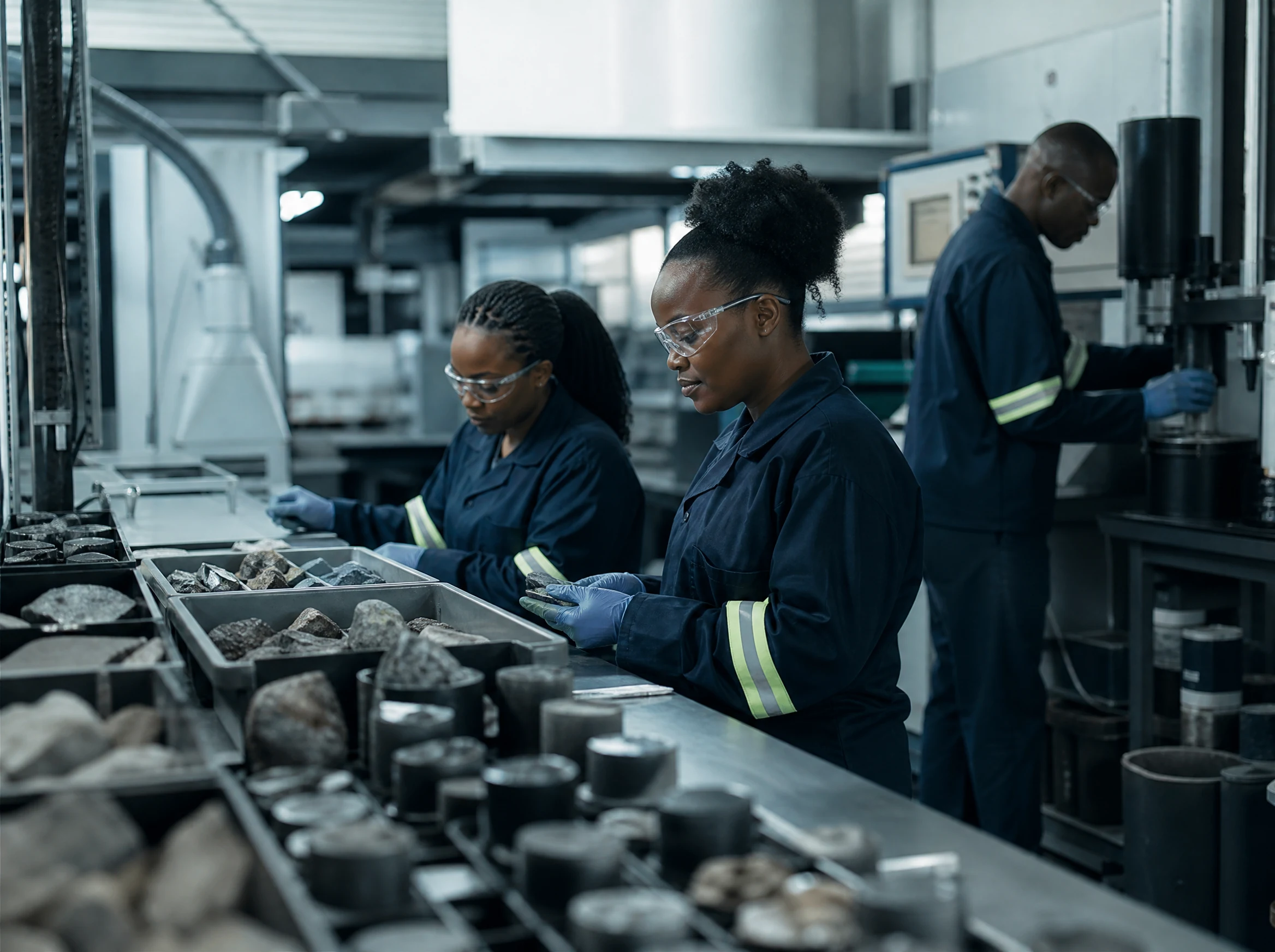
Bench-scale test work assesses processing options on small, controlled samples. It is fast and comparatively cheap, and it is the right tool for narrowing a field of candidate routes to one or two.
Pilot-scale work runs an integrated circuit continuously at a larger scale. It costs considerably more, and it is justified where scale-dependent behaviour — recycle accumulation, dewatering, reagent consumption in closed circuit — would materially change the outcome if it were assumed rather than measured.
What a programme covers
Bench-Scale Test Work
Early technical assessment of processing options under controlled conditions.
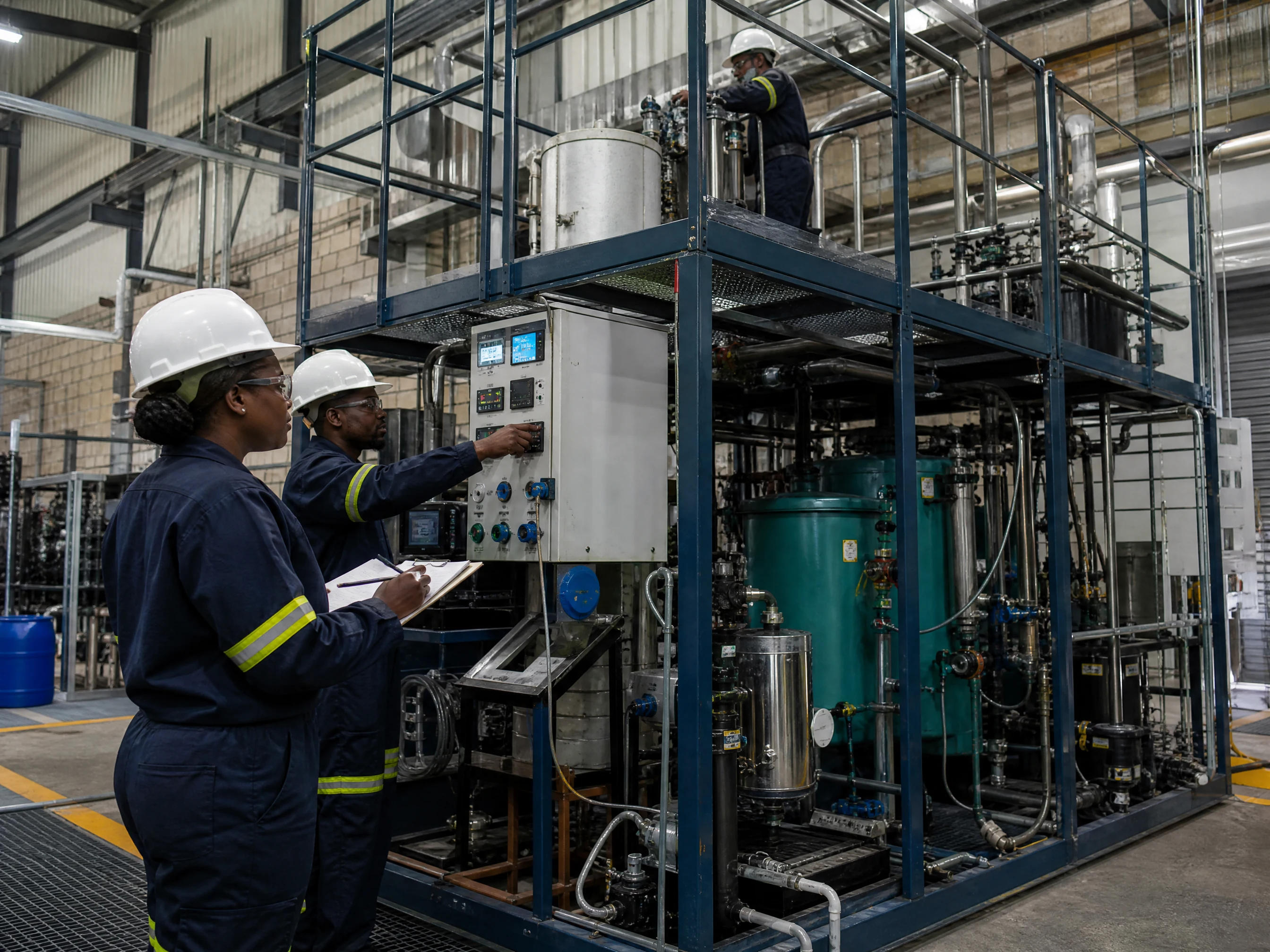
Pilot-Scale Demonstration
Integrated running at a larger scale to expose behaviour bench work cannot show.
Process Assessments
Evaluation of recovery-route performance and the constraints that limit it.
Mass & Energy Balances
Quantified inputs, outputs and energy requirements across the circuit.
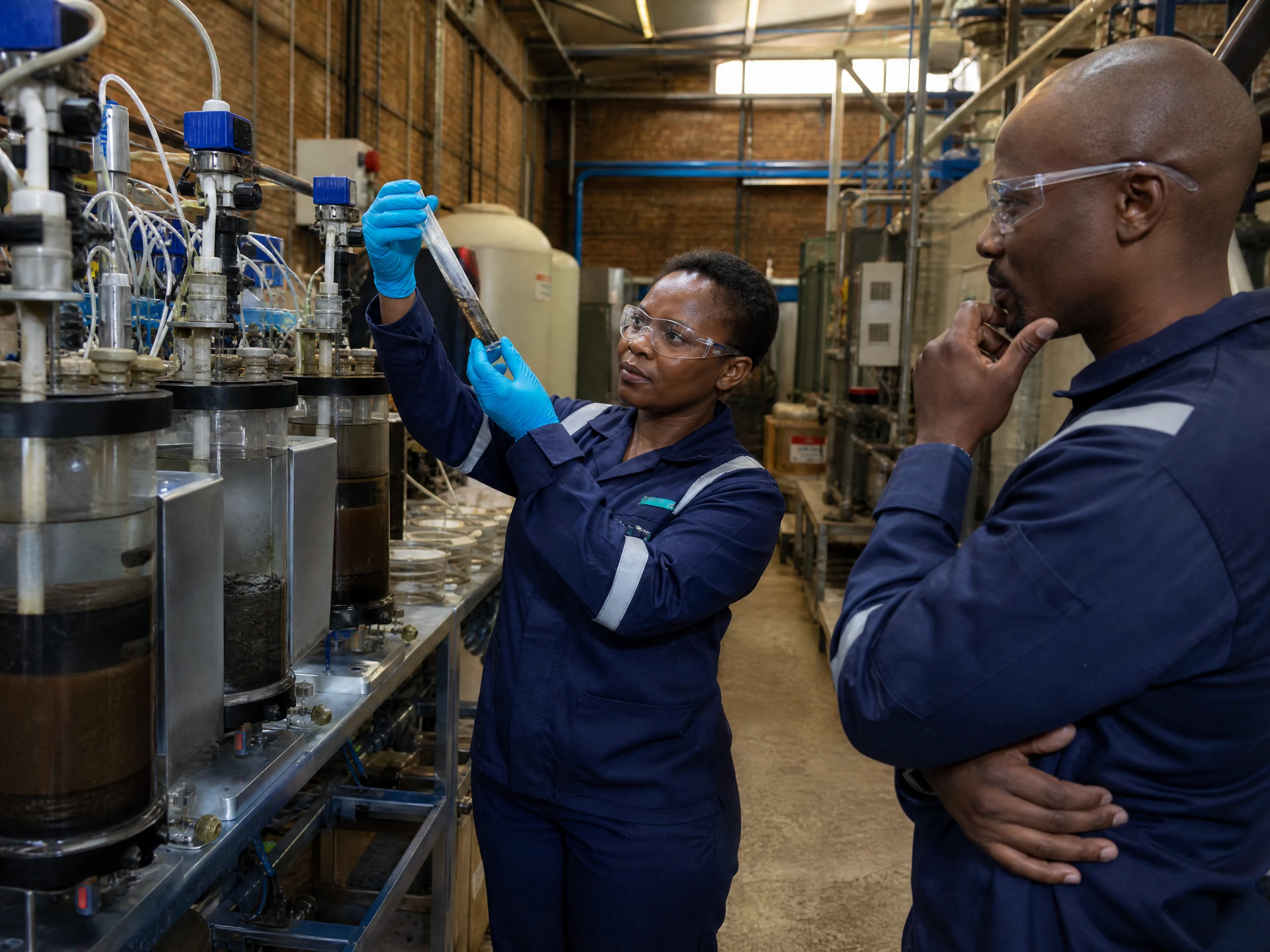
Characterisation
Chemistry, mineralogy, particle size and deportment of the target element.
Reporting
Results stated with their confidence limits and the conditions they hold under.
Model, test, compare, refine
Validation is a loop rather than a line. A model predicts, test work measures, the difference is examined, and either the model or the understanding of the material is corrected.
That loop is what turns a plausible flowsheet into one with defensible numbers behind it.
- Predicted against measured, with the gap explained
- Conditions and confidence limits recorded alongside results
- A clear scale-up recommendation, including when it is 'not yet'
What you receive
A test-work programme should leave you able to make a decision. That means recovery and grade data with the conditions attached, closed balances, an assessment of what remains uncertain, and a recommendation on the next stage.
We do not publish or report performance figures that the test work does not support.
Frequently asked
Yes. Test work is frequently commissioned on its own, either to assess a stream for the first time or to independently verify results obtained elsewhere.
It depends on the programme, but representativeness matters far more than volume. A large sample that does not represent the stream produces confident, misleading results.
Bench-scale programmes are typically measured in weeks and pilot campaigns in months, but the honest answer depends on the material, the number of candidate routes and analytical turnaround.
Yes. Confidentiality arrangements are put in place before material or data changes hands, and non-confidential summaries can be agreed where a project needs wider discussion.
Discuss your material or process challenge
If you hold a residue stream, by-product, tailings resource or slag with possible recoverable value — or a process that is not performing as designed — we are interested in the technical detail.